
Astonishing Root Drawings that Will Elevate Your Planting Designs
Jul 12, 2026
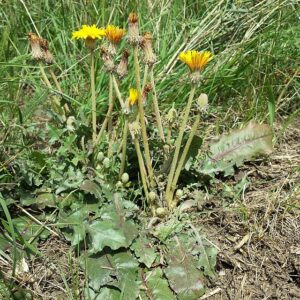
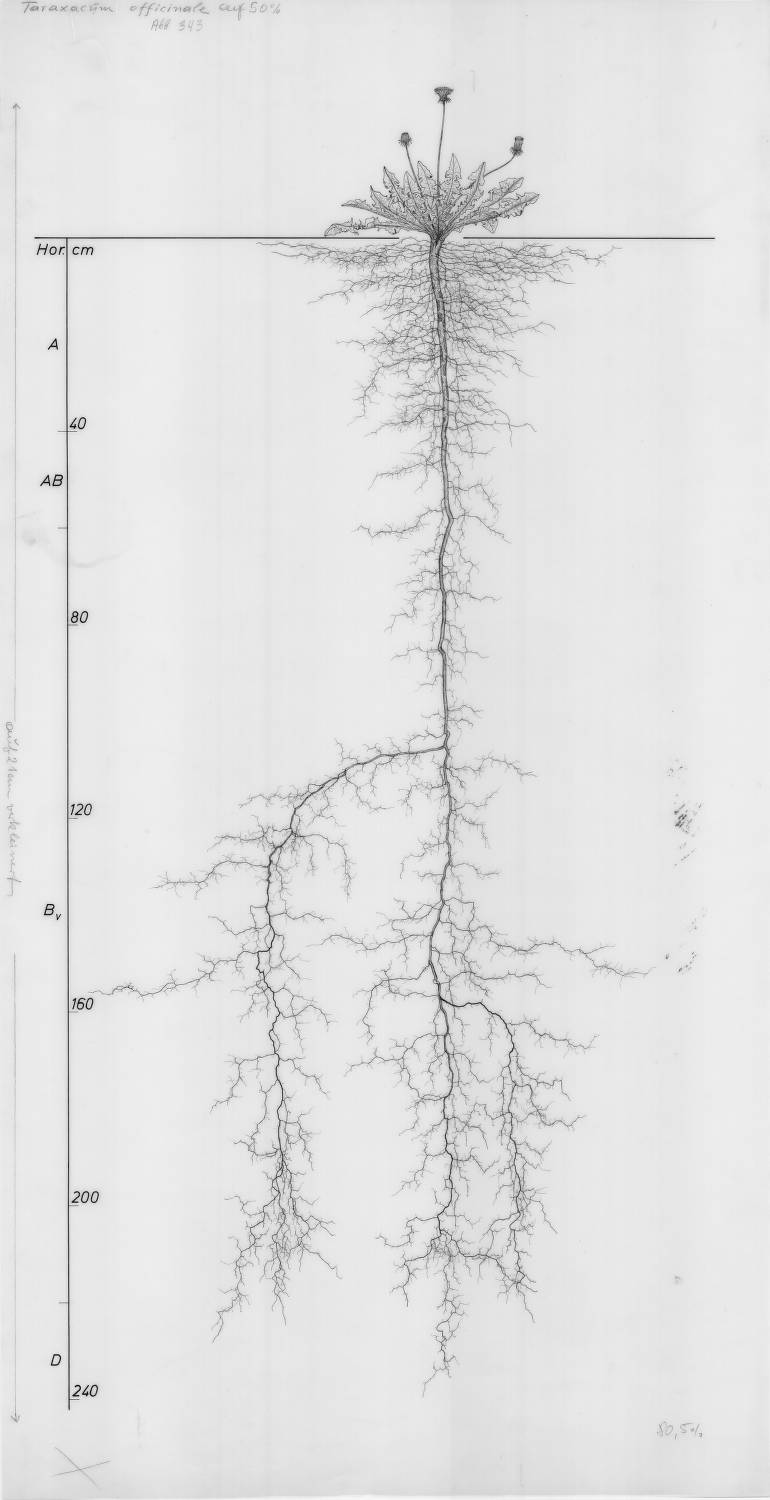
Have you ever wondered why Dandelions are so hard to get rid of?
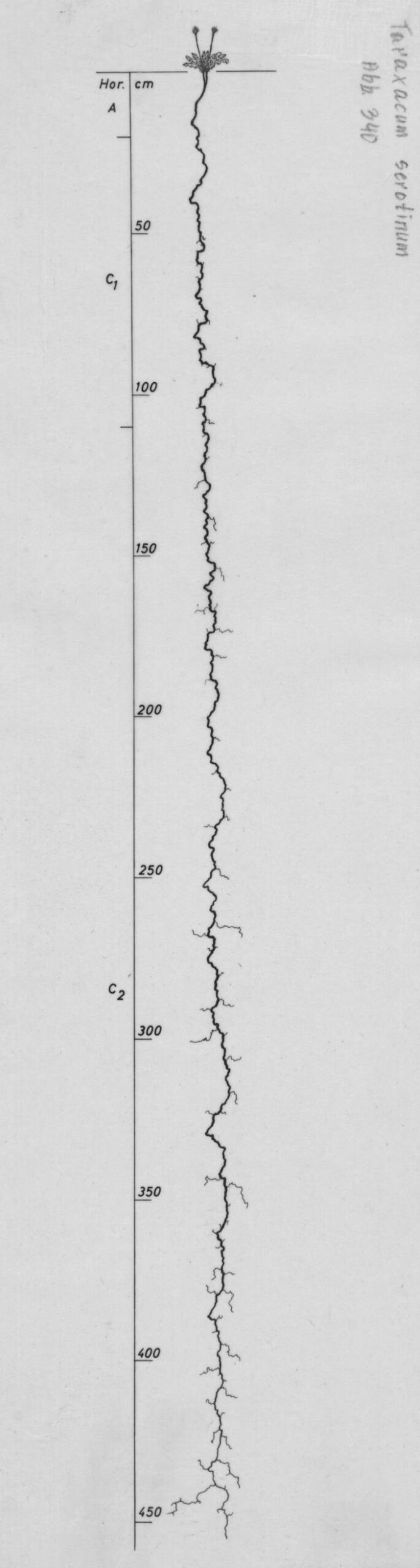
One look at a drawing of its root system says it all. As you can see, they anchor the plant over 4.5m (14') deep.
This startling illustration is just one of the 1100+ invaluable drawings contained in the Wurzelatlas (which translates literally as, Root Atlas). It includes seven volumes of material (published between 1960 and 2009) that contain more than 40 years of fascinating research on root systems by Dr. Lore Kutschera, Dr. Erwin Lichtenegger and Dr. Monika Sobotik and their teams.
How The Drawings Were Made
These researchers created the drawings contained in the Wurzelatlas by exposing and meticulously recording each plant in situ (mostly in rural areas). Excavating the soil particle by particle and drawing each and every aspect of the plant as they worked.
What becomes readily apparent when viewing them is both, the sheer complexity of the root systems, plus their responses to conditions. They offer a window into a world that we walk overtop of everyday, without truly understanding.
Initial Shifts
It's important to note that when the first drawings were released back in the 1960's, they had an immediate effect on agricultural practices. Just think of that dandelion drawing and it how it might change your cropping and maintenance tactics.
The information shared in the Wurzelatlas was revolutionary and soon became the foundation of many aspects of modern horticulture, from organic agriculture to ecological planting design.
As the project continued over the years it evolved to encompass a wide variety of plants, shrubs and trees from many ecosystems mostly found in central Europe. Today, the series is considered the standard set of reference material in root research. In Fact, Dr. Kutschera's legacy continues today in the form of the International Society of Root Research (ISRR) which she founded in 1983.

The Impact of the Root Atlas on Modern Planting Design
If you’re interested in horticulture, I’m sure that you’ve heard lots of complex concepts and ideas being discussed. Some of these can be difficult to catch on to but the theories behind many of them become readily apparent when you see these rootscapes and begin to visualize how the plants interact in nature and gardens.
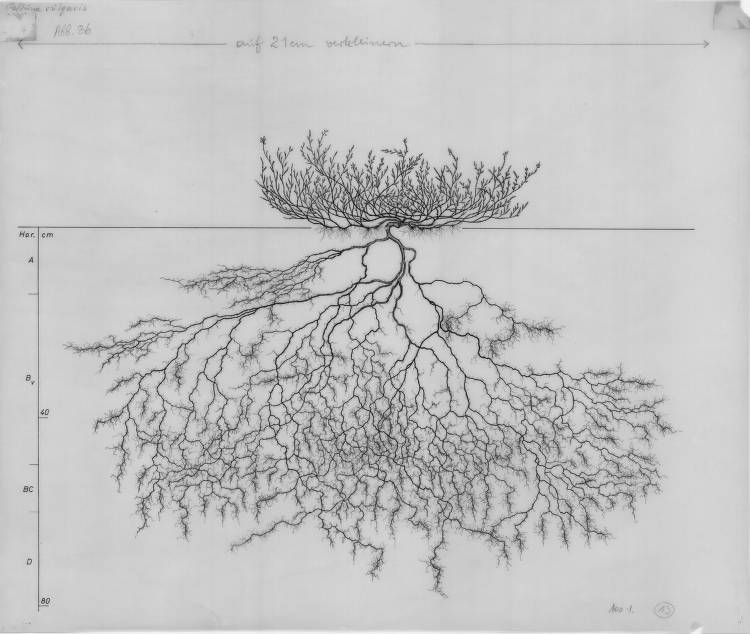
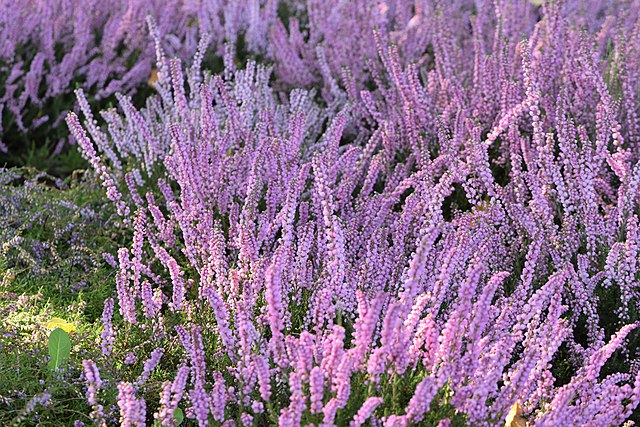
Take a heather for instance, with a shallow but far reaching root system it's well adapted to mineral soils, lacking in depth. Hence its use, and some might say overuse, in parking lots and commercial plantings.
Now that you see where I'm going, let's go through a few of the most popular planting concepts and compare them with the Wurzelatlas drawings.
Climate Adaption and Resilience
Climate change has brought us an increasing number of extreme weather events. Floods, drought and severe temperatures are nothing new to plants and some are uniquely adapted to deal with them. As designers and gardeners we can build resilient plantings if we can understand what events are most likely to happen in a specific climate and match the plant material that will survive and hopefully thrive in them.
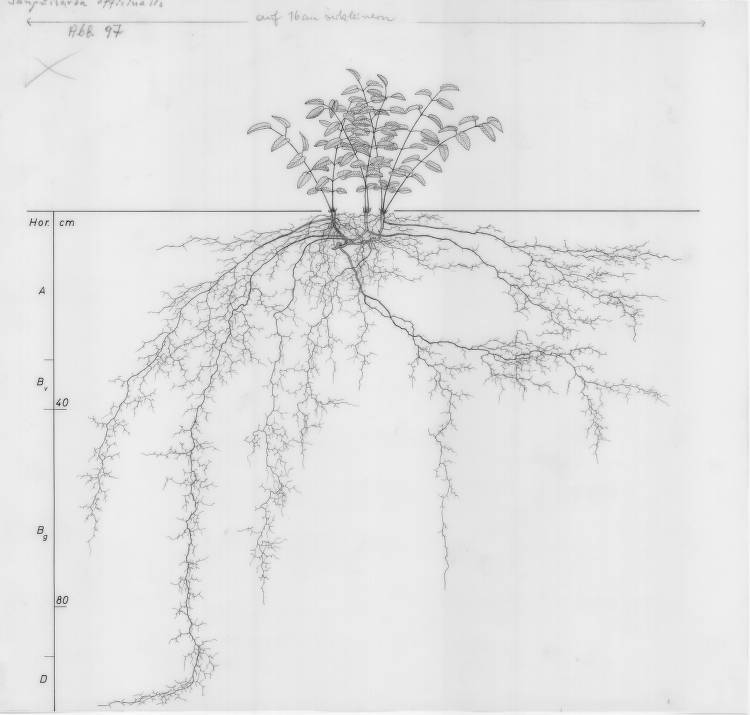
For instance, a plant like Eryngium with its deep tap root can reach into the soil to find water in times of drought, just look how far it infiltrates.
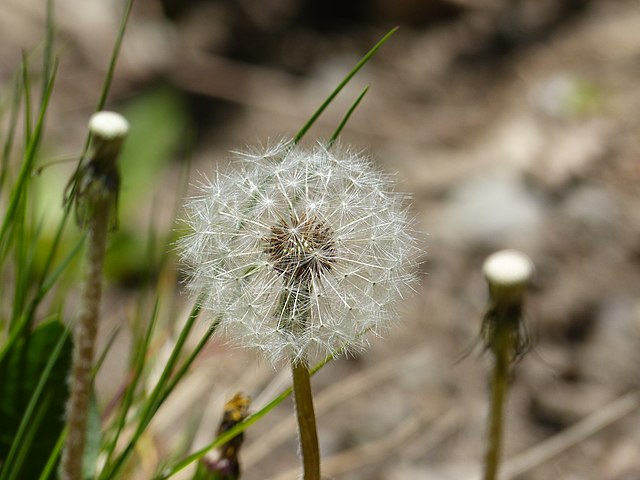
The same goes for our long-term maintenance techniques, if you understand why a weed is so resilient you can adjust your removal or containment techniques. A dandelion for instance won't be easily shifted, note that huge root system that digs deep into the soil. Topping it, won't eradicate it, it will simply regrow. It's also important to acknowledge that those same roots make it the perfect tool for mother nature to break up compacted and disturbed soils.
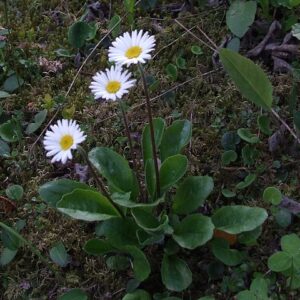
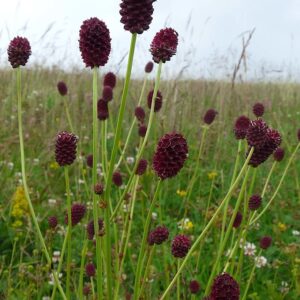
It's amazing how similar the two plants are when you see them next to each other.


Plant Communities
Observing how plants grow together in the wild is another piece of the puzzle. The majority of plants do their best when living in groups where they can share information and resources, building a strong and resilient community. Much like a person living in a vibrant city rather than in isolation.
When you see the Atlas's drawings of different plants and visualize what all of those roots systems might look like under the soil, growing together and interconnecting you can really get a sense of just how important and complex plant groupings can be.
As you can imagine, a variety of root types and plant survival strategies work well together. They fill all of the niches in the soil and weave together with strands of mycelia; populated by soil micro organisms and insects to create a rich and diverse community that can better survive extreme weather events.
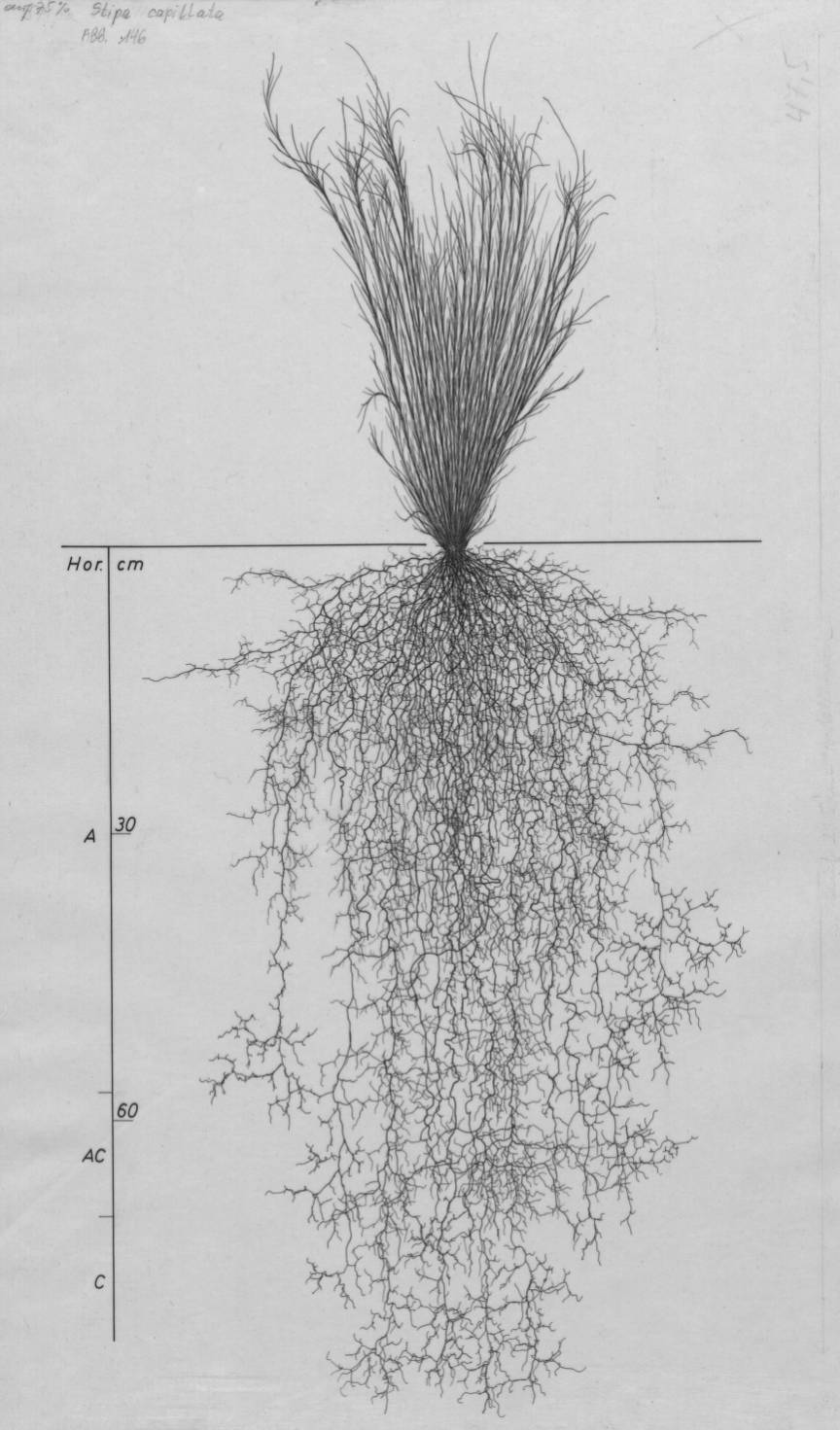
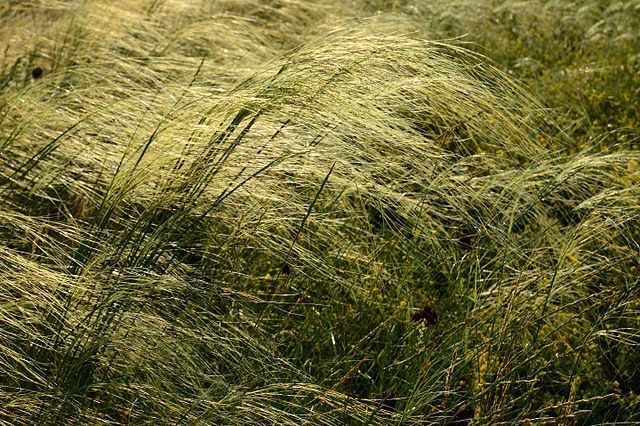
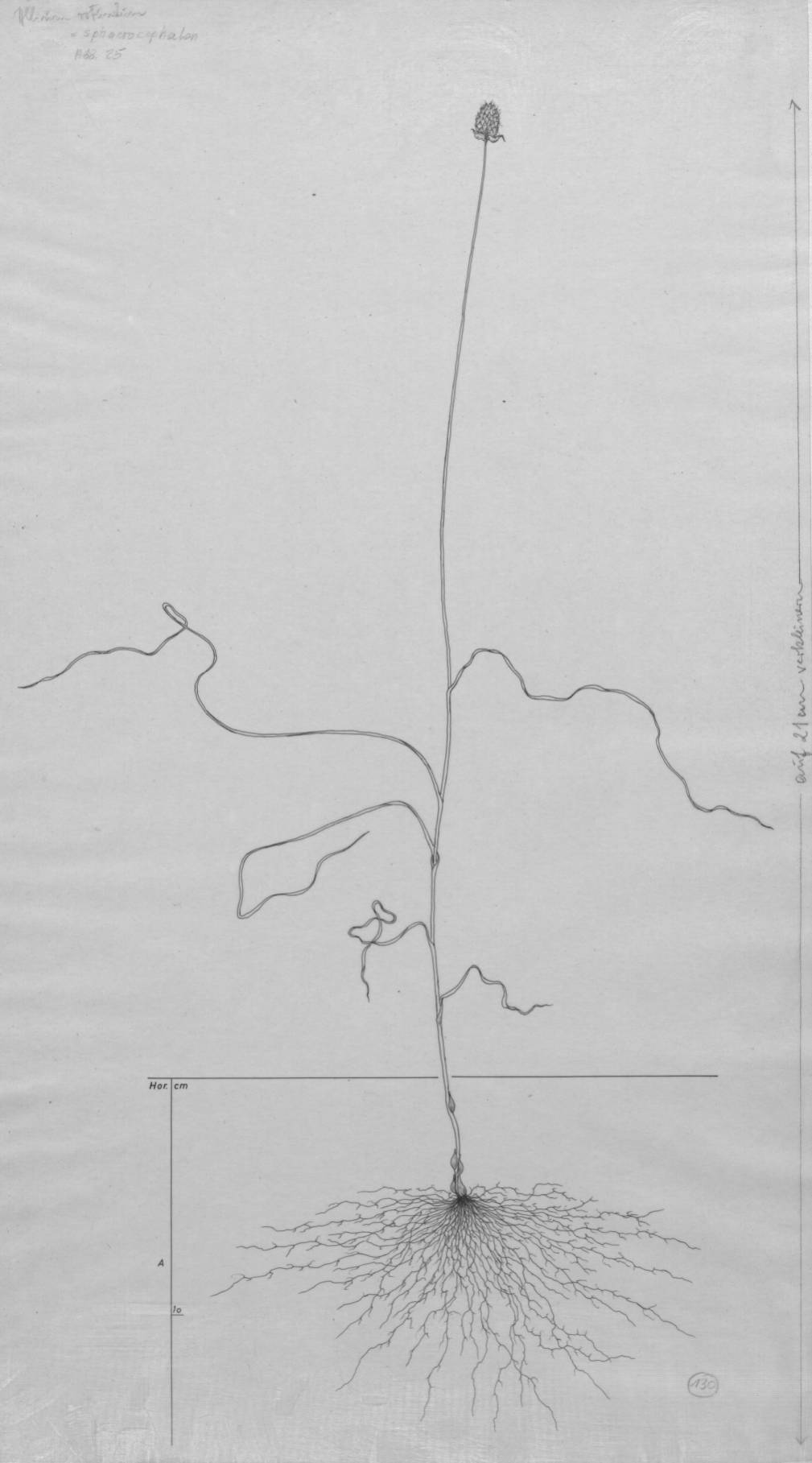
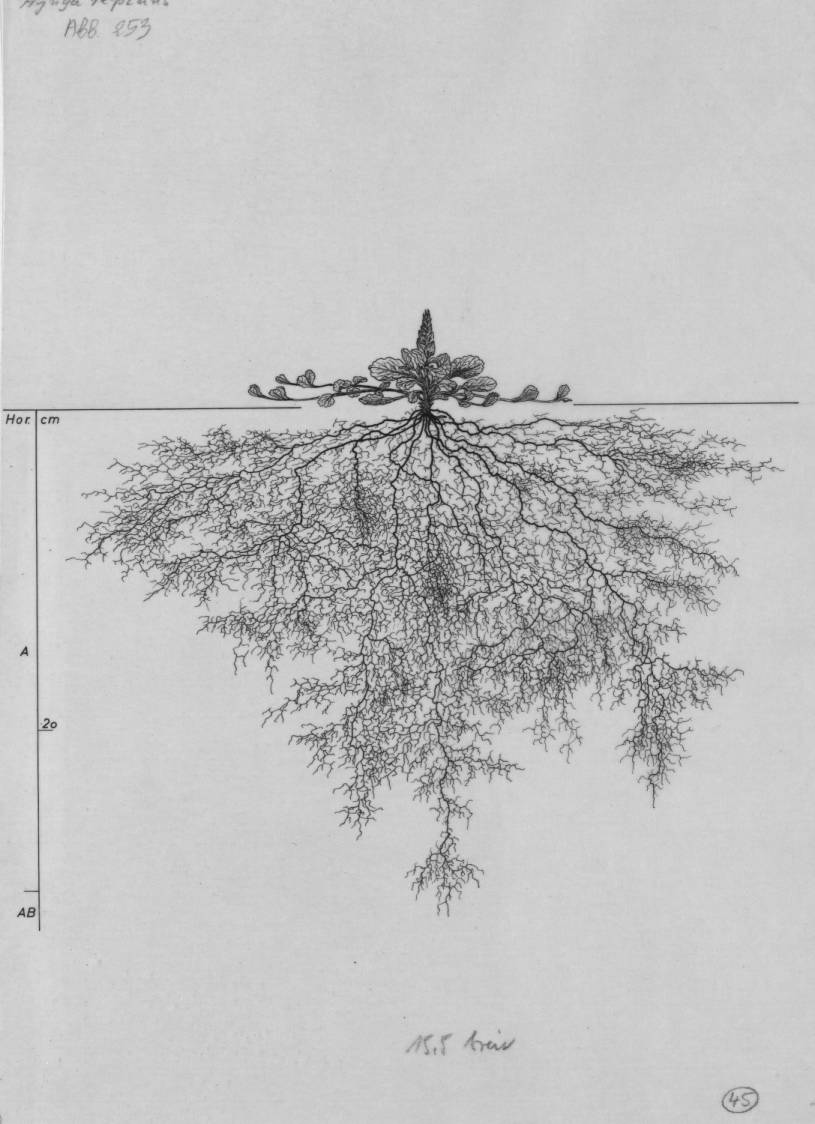
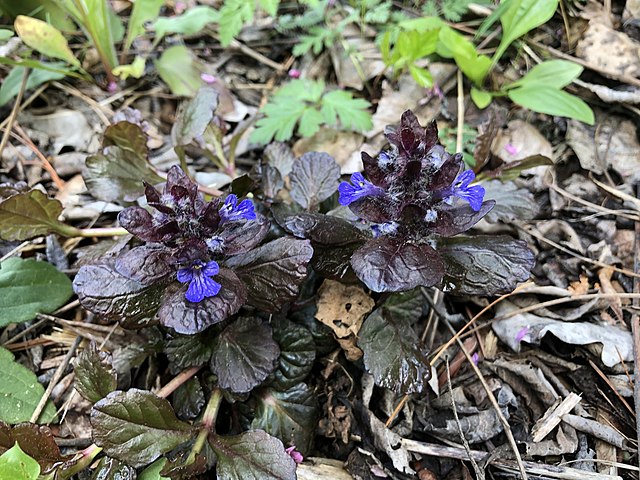
For example, deeper fibrous roots like those of a Stipa grass mix well with shallow bulbs like Allium and the widespread fan of a ground cover such as Ajuga.

Plant Sociability Metrics
Every plant has evolved to deal with specific conditions. Sociability Metrics are a way to assign ratings to each plant based on their individual adaptions and their corresponding survival strategies. It considers things like how resilient they are to stress or competition, plus the patterns and density of planting that they prefer.
We use several kinds of metrics including:
C-S-R ratings, that consider how each plant deals with Competitors (C), Stressors (S) and Rudurals (R aka disturbance).
Plant Sociability Index (PSI) which grades the material based on their preffered groupings and patterns in the wild. They are assigned a rating from, Grade I (those that exist as single specimens or are in small clusters (non-invasive) up to Grade V (plants are defined as those that colonize large areas).
And finally, Performance Factors , which considers multiple facets such as longevity, ability to spread, persistence and ability to seed.
All of these systems combined can help us to predict how a specific plant may behave within a designed plant community. And, as we view the root drawings of the Wurzelatlas, we can see these factors as the appear in situ, in black and white.
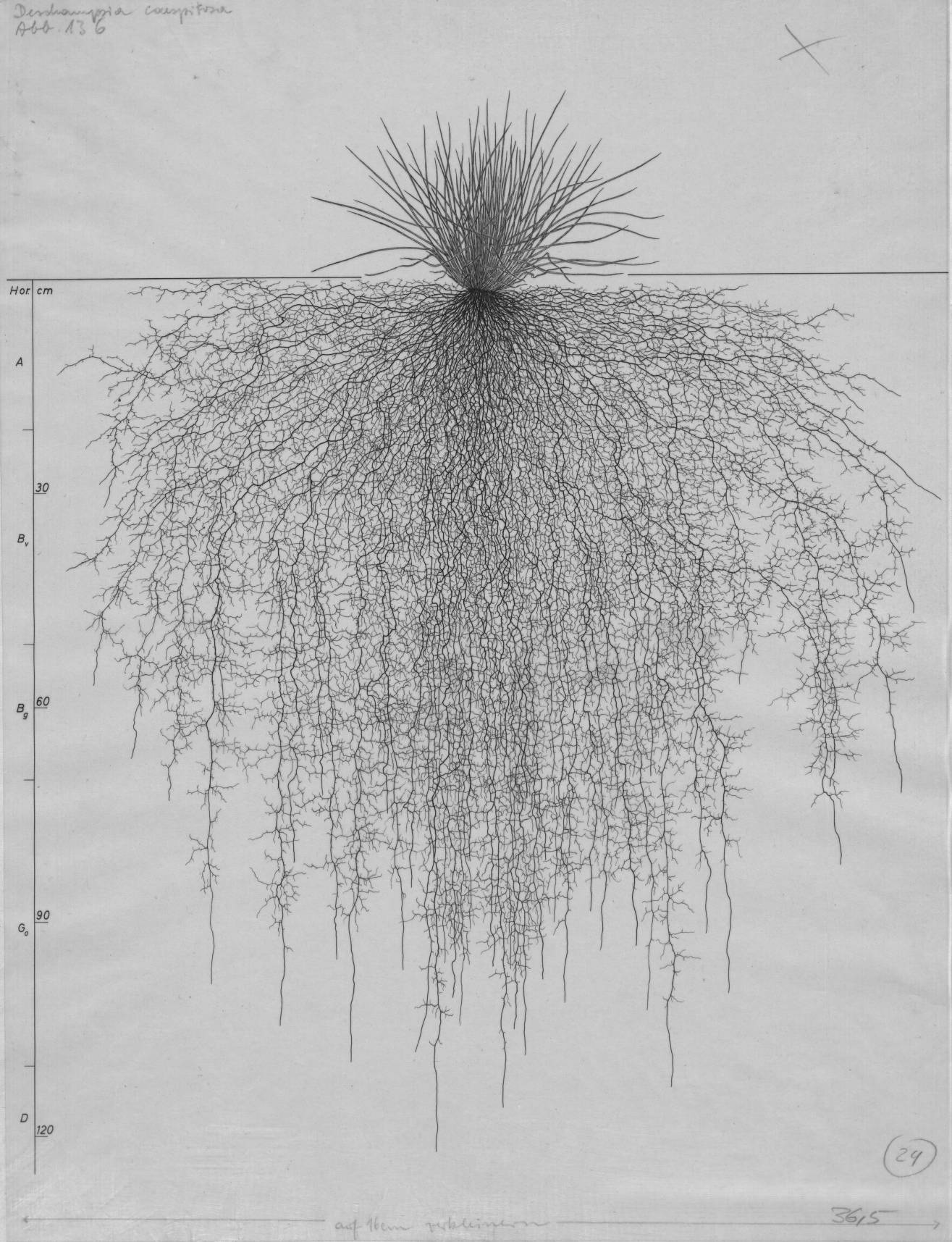
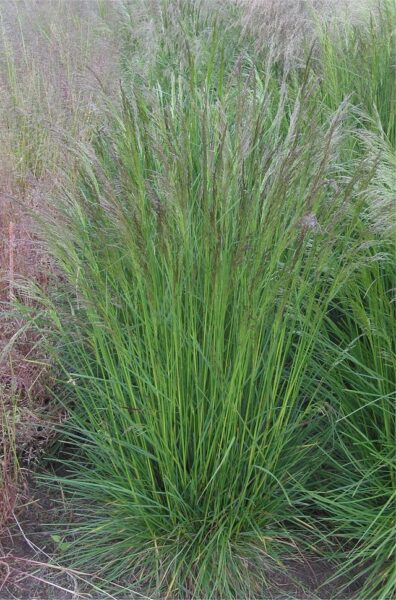
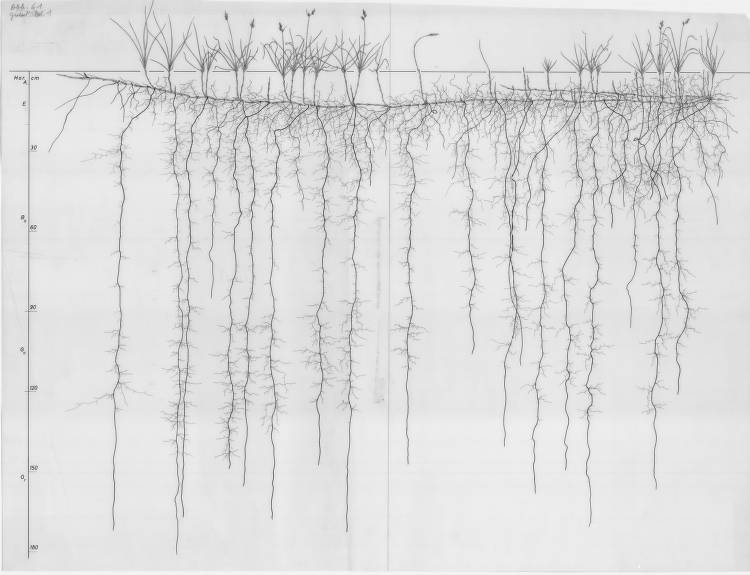
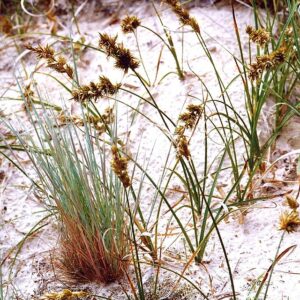
Let's look at Deschampsia for example,
C-S-R rating: Competitor with some Stress tolerance (C, C-S)
PSI: Grade I, plants that exist as single specimens or are in small clusters (non-invasive)
Performance Factors: longevity (10+ years), ability to spread (moderate growth rate), persistence (out competes others through density of roots), ability to seed (slow to seed)
So, we can say that those dense fibrous roots make this grass a long-lasting perennial that will stay where it's planted. And, that it can be planted on its own and won't be easily over taken by other species. I mean look at those roots, this is a strong plant that would be great for erosion control and can take some environment stress as long as it's not sustained.
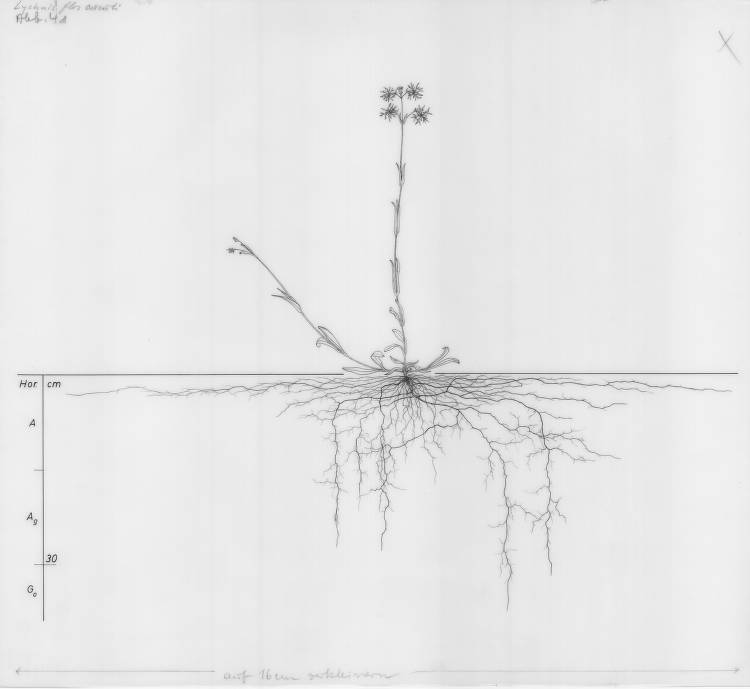
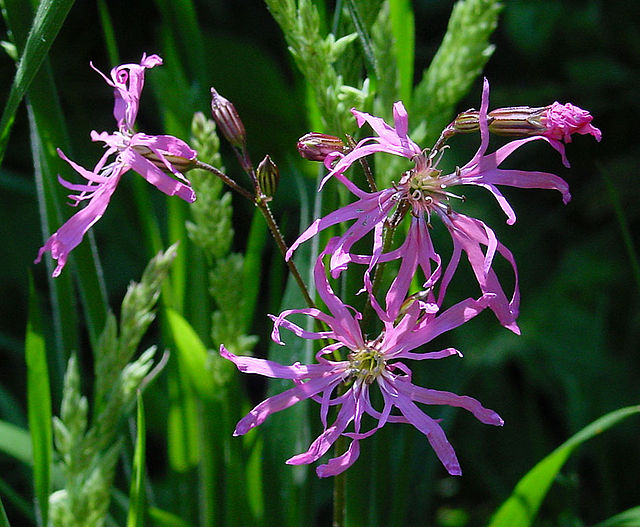
Here's another one for contrast, Ragged-robin,
C-S-R rating: R (ruderal)
PSI: Grade V (plants that colonize large areas)
Performance factors: longevity (perennial), ability to spread (single plants are vulnerable), persistence (outcompetes others through density of plant groupings), ability to seed (profuse self-seeding).
Here, we have a perennial that's partial to damp meadows. It thrives in disturbed soils and self seeds like nobodies business. So, depending on its neighbours, Lychnis flow-cuculi can either be a thinly seeded pop of colour or a dense stand of invasive plants. And, you can easily see that when looking at the Root Altas drawing for Lychnis. The plants loose stretching root system is adequate structure for a single flower stock and seed head, that growing in isolation, it is quite vulnerable but in large numbers can outcompete neighbours.
Sustainable and Ecological Design
There's a real movement towards multi-functional landscape design; finding a good balance between human desires and natural processes.
The aspects of public green spaces that we all want, should include beauty but not limited by it. It's about working with nature rather than attempting to tame it. Including maintenance goals that extend well beyond design and planting alone. Working to create inclusive gardens, rather than exclusive ones, that will last long into the future.
Virens Studio advocates building plant communities and using research like root and pollinator science to best inform soil and plant choice for long-term ecological function. Choosing plants that take into account all of the spaces stakeholders (be it humans, wildlife or plantlife).
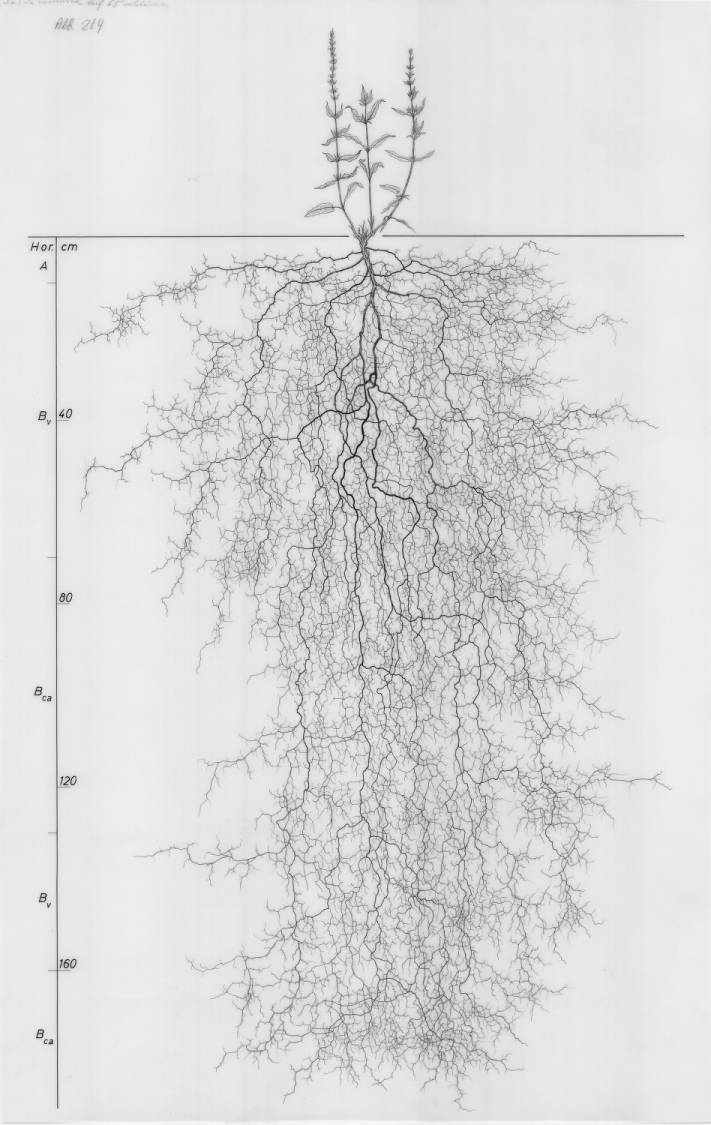
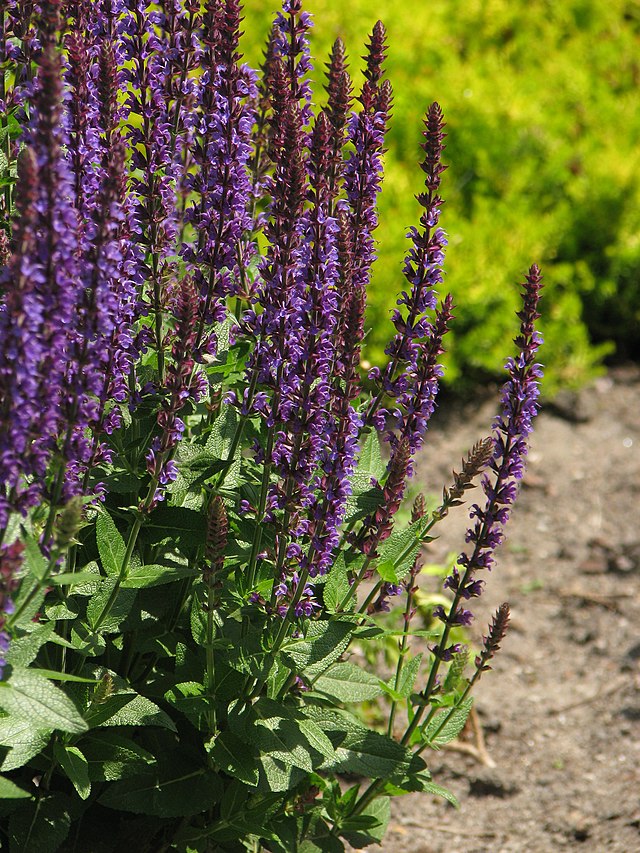
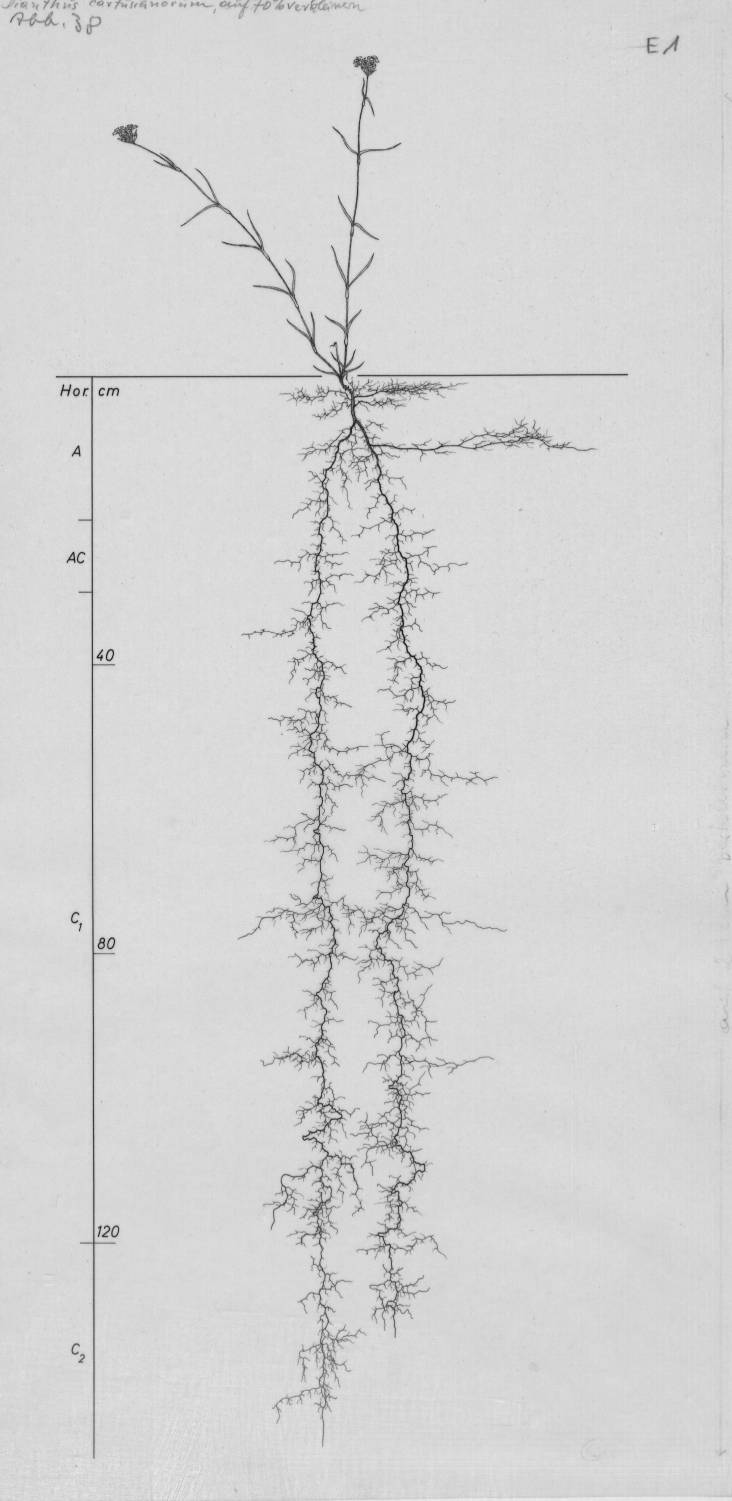
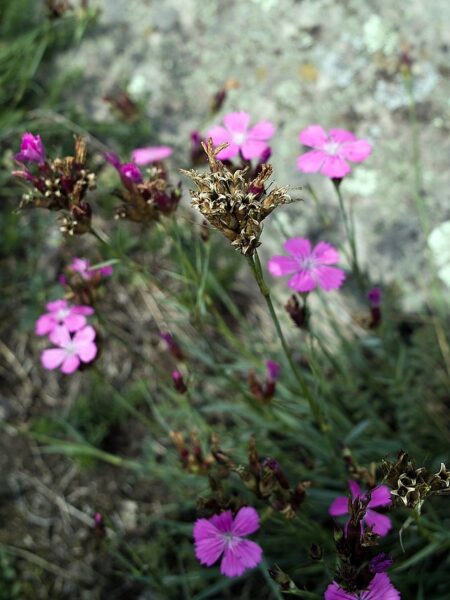
For example, Salvias are strong resilient, long-lived perennials with far reaching root systems that help knit together groupings. And, Dianthus gives a beautiful effect in a planting but also has deep set roots that can search for water and nutrients in dry conditions.
Novel Ecosystems and Regenerative Plantings
Planting design has begun to utilize all of the concepts above in an attempt to create new ecosystems that are capable of regenerating themselves year after year with less (but more thoughtful) human interaction.
A novel ecosystem is one that’s planned, rather than natural, based on the current existing conditions (or those added in the case of new construction) in a space. Since the vast majority of the urban landscape has been greatly disturbed, the restoration of past systems may in many cases be either impossible or undesirable.
The most complete regenerative systems are often those used in habitat restoration/ reclamation projects in naturalized or wilderness areas. But, that's not to say that and urban planting can't utilize some of these techniques.
A few cornerstones of novel and regenerative designs involve:
Direct seeding - Let those roots grow and expand in situ rather than pots, where possible. Seeding is also great to increase density, protect soil and save money.
Dense plantings - Plants in closer proximity to each other knit together faster and create resilient communities. This leaves less space for weeds and protects bare soil from erosion.
Allowing nature to do her thing - Nature is perfectly functional on it's own. Our role is simply to help it along, as a participant in the ecosystem not something 'outside' of it. Where you can choose to take on the role of animals that are no longer a part of it. Like a hungry deer that will remove the tops of perennials, removing biomass and creating nesting space for solitary bees.
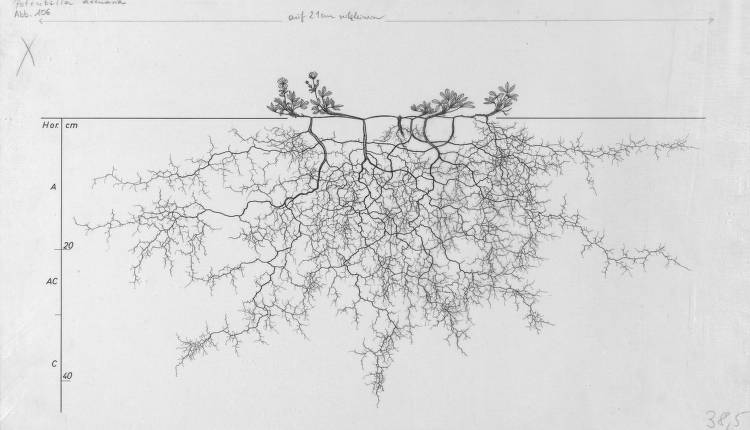
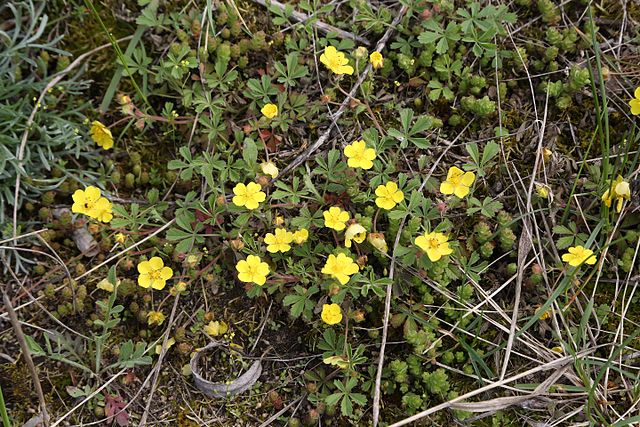
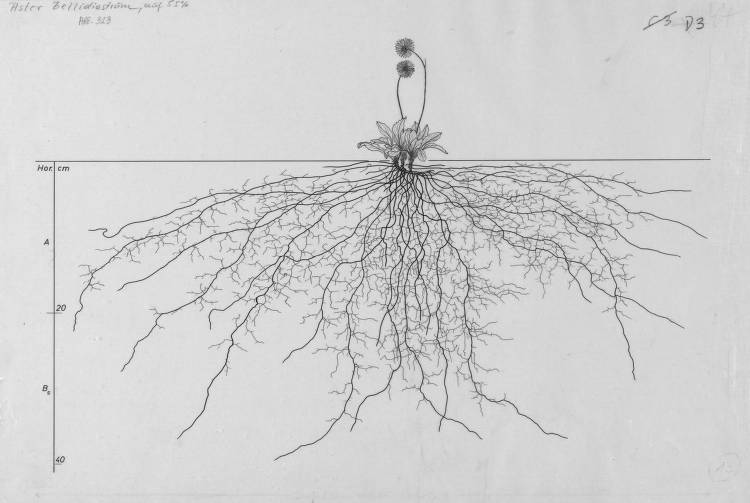
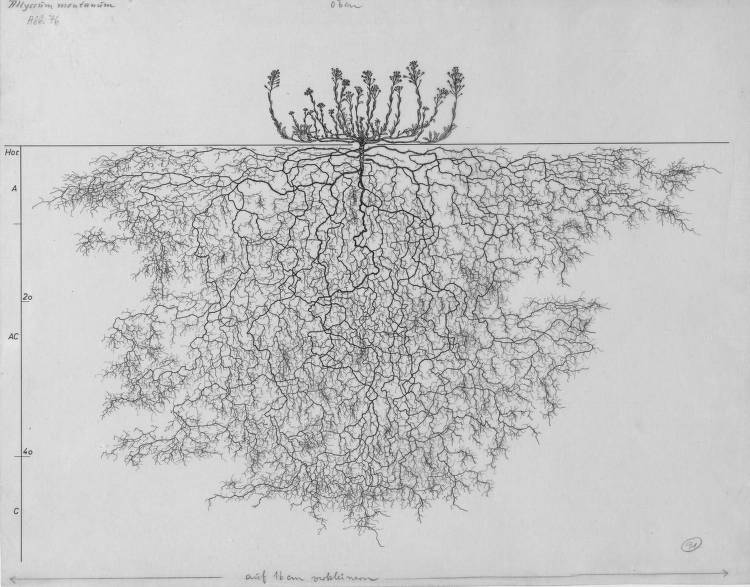
As you can see in the Wurzelatlas, plants like Potentilla and Armeria may seem somewhat insignificant above ground but there is so much more happening below.


The Tip of the Planting Iceberg
In short, there’s a great deal going on in our parks and gardens that we simply don’t see. Roots, mycelia and microscopic soil organisms, moisture, air and so much more are all equally important parts of our environment that we need to consider a bit more as we build green spaces. So, the next time that you’re around plants, stop for a moment and think about the Wurzelatlas and it’s fantastic rootscapes, and all that's going on right under your feet.
For more information on the Wurzelatlas, you can pick up a copy where books are sold (you may have to search for some of the earlier volumes) or visit the drawings online at Wagingen University and Research.
And finally, we owe Dr. Monika Sobotik, of the Plant Sociological Institute and co-author of the Wurzelatlas a huge thank you for allowing us to post the root drawings used in this article.
Sara-Jane at Virens Studio
Virens, located western Canada, specializes in ecological landscape and planting design. Please get in touch today, follow us on socials and checkout, Hedgecraft Willow, our latest expansion into natural building materials.
© Virens Studio 2025 (all photos are used for demonstration purposes and do not necessarily belong to us.)


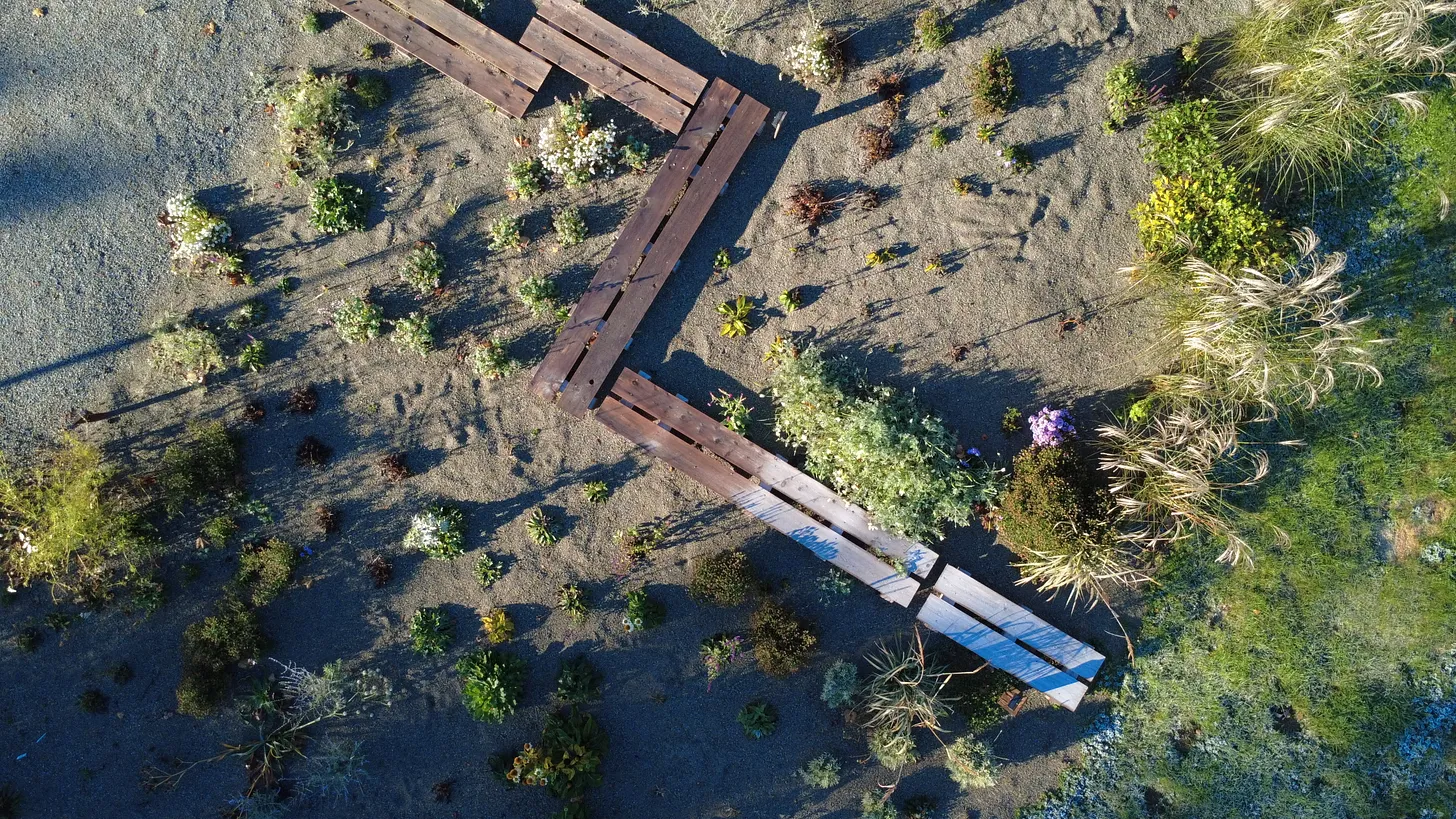
What’s a life lived without any vices, dirt or messiness? I might reply, boring. Because, when I think about it, what’s more interesting to witness and be a part of? Think of a classy soirée. Where everyone arrives dressed to impress, with manners to match. On their best behaviour, that is, until late into the…
Are You a Lazy Gardener? Or, a Habitat Hero?
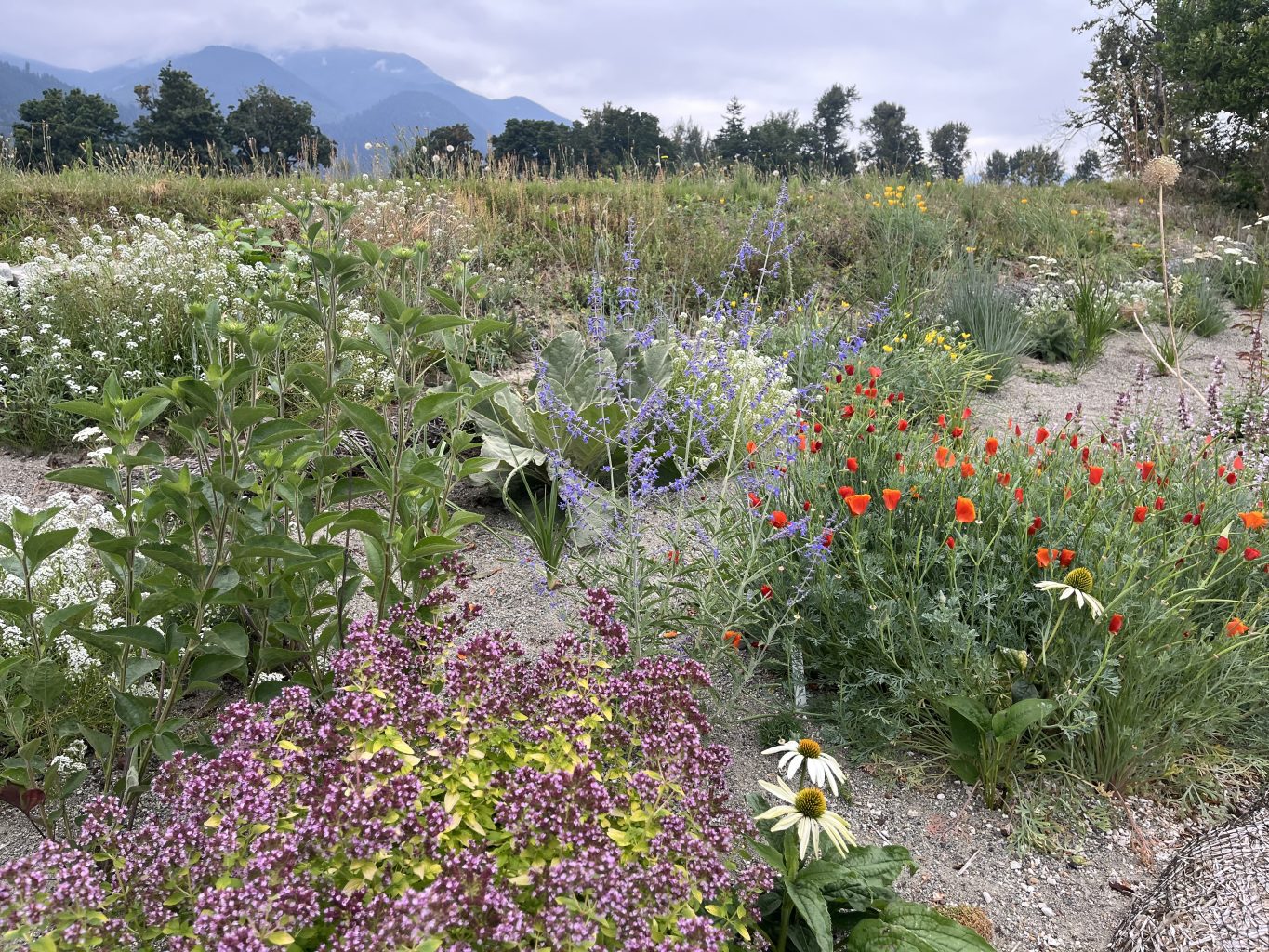
I’ve been working as a gardener and landscape designer for nearly 20 years. In some ways, I find this hard to believe (there’s more to learn) and also totally true (when I think back to some of the things that I was doing in my first years in the Parks Department). But I digress, what…
How I Choose Plants (as a Professional Landscape Designer)

I see people slowing down for a good long look at my new garden. And as I clock their movements, in my mind I can hear them saying, “what kind of landscaping is that?, the plants are all soooo small and what’s with all the sand?!” Well, as a planting designer, former parks gardener and…
The Sand Garden: A New Experiment Begins